
Humboldt and Del Norte Counties (September 15, 2026) — School and district leaders, Tribal leaders, Indian Education programs, Native-serving organizations, youth programs, higher education partners, and community organizations from across Humboldt and Del Norte Counties gathered this month for the first session of the Meaningful Consultation Series: From Consultation to Collaboration: Building Relationships, Growing Partnerships.
Hosted by the Northern California Indian Development Council (NCIDC), Eureka City Schools (ECS) and Humboldt County Office of Education (HCOE), the gathering created space for educational and community partners to listen, learn from one another, strengthen existing relationships, and begin developing new partnerships focused on the success, belonging, health, and well-being of Native American students and families.
The effort began in 2024 with the relationship between the late, awok Sonny Tripp, a Karuk community advocate and Indigenous Education leader with NCIDC, and Eureka City Schools Superintendent Gary Storts.
“Sonny Tripp understood that meaningful consultation was never meant to be a box we check; it should be about meaningful connection,” Storts said at the event. “We honor Sonny’s vision when schools, Tribes, families, and community partners build relationships grounded in listening, trust, and shared commitment, and when those relationships lead to better opportunities for Native youth.”
Together, Sonny and Gary began building the foundation for what would become a broader regional effort.
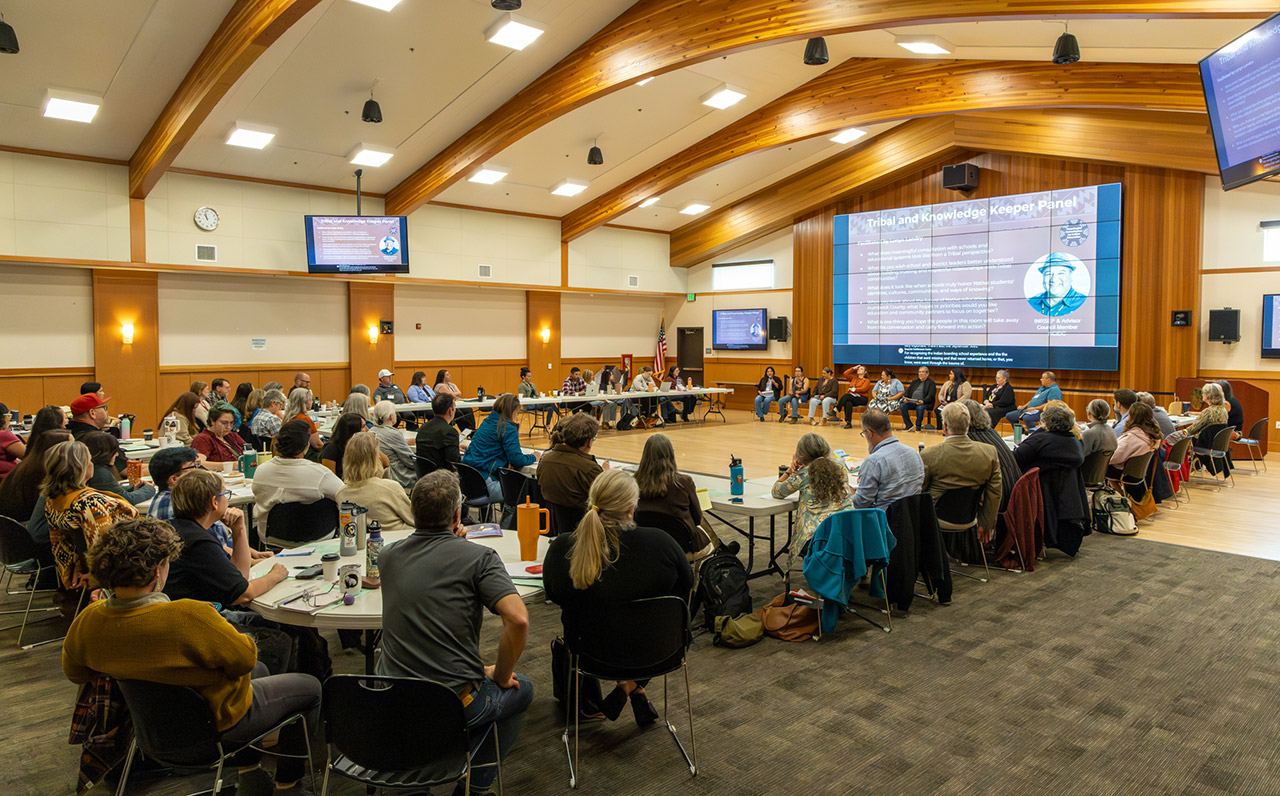
The three-part series is designed to move beyond consultation as a procedural requirement and toward meaningful, reciprocal relationships grounded in Tribal sovereignty, trust, shared responsibility, and sustained collaboration. Elizabeth Hernandez, Education Director for Tsek Houdaqh—Where the Children Are, opened the gathering with a Tribal welcome and a reminder that education has always been a collective responsibility within Native communities.
“Our people have always considered education a collective, community effort,” Hernandez said.
Hernandez also reminded participants that Native people continue to educate their children, pass down knowledge, and keep traditions and languages alive. She called on participants to recognize the roles they each play in Native students’ lives and to participate in meaningful, ongoing collaboration, saying that “quality and culturally responsive education continue to be a collective effort.”
HCOE Superintendent Michael Davies-Hughes emphasized that meaningful consultation begins with relationships and requires follow-through.
“Trust isn’t something we can declare into existence,” Davies-Hughes said. “Trust is built over time through consistency, honesty, listening, and follow-through. It’s built when our actions match our words.”
Davies-Hughes also challenged participants to think beyond organizational boundaries.
“Today’s gathering isn’t about our organizations. It’s about our Native students and Native families,” he said. “It’s about creating the conditions where every student feels seen, valued, connected, and supported.”
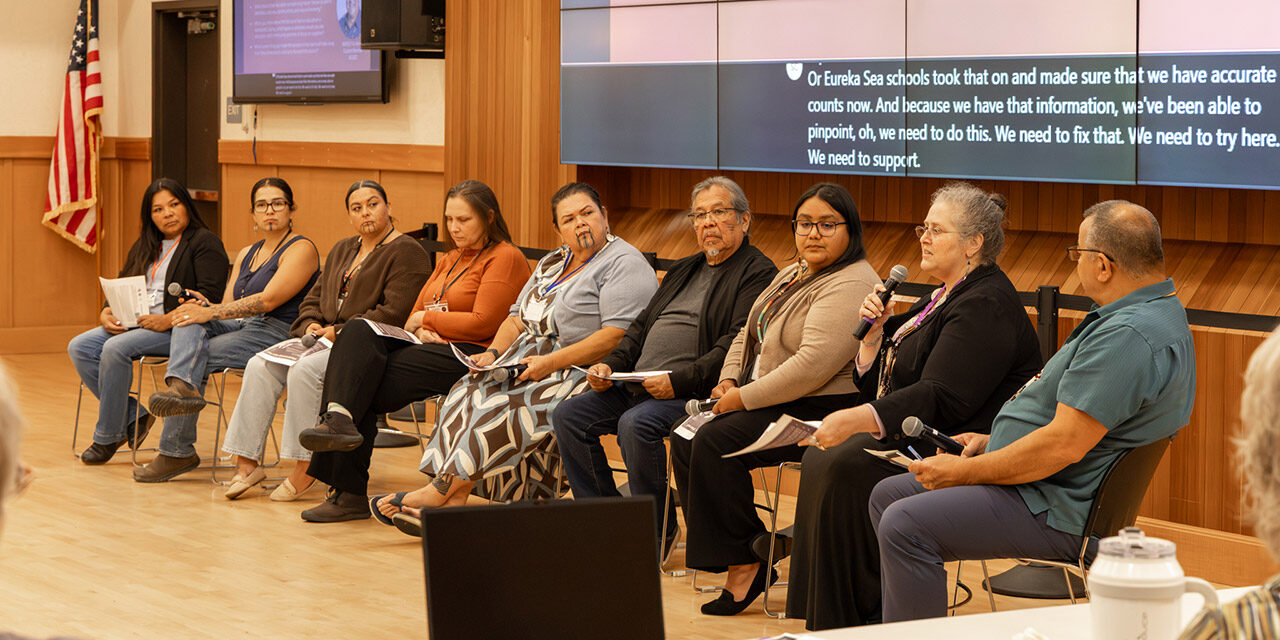
Participants explored regional data related to Native American student achievement and attendance and viewed Native California History, an educational primer accompanying California’s Native American Studies Model Curriculum. The day continued with partner showcases and panels featuring Tribal leaders and knowledge keepers, public school programs, Native and youth-serving organizations, and school leadership.
Participants also learned about successful programs and partnerships, including Tribal language initiatives, Blue Lake Rancheria programs, and higher education efforts supporting Native students. The afternoon focused on collaboration planning, giving participants an opportunity to identify relationships, shared priorities, and concrete actions they could carry back to their schools, programs, and organizations.
Angie Brenes, Indian Education Program Director for Northern Humboldt Union School District, emphasized the importance of bringing the many people connected to Native students and families into the same conversation.
“Meaningful Consultation leads to meaningful action,” Brenes said. “When all players involved in students’ and families’ lives come together we are able to serve the community in a holistic way, which is inherent to the self determination rights of Tribes and Indian Education Programs.”
The importance of creating space for many perspectives was reflected in participant feedback. Attendees described the gathering as “meaningful,” “safe and supportive,” and “well organized,” while highlighting the value of hearing from people working across different parts of the educational system. Participants also emphasized the opportunity to deepen existing relationships and create new connections.
The gathering surfaced both the strength of existing efforts and the need for continued work. Participants identified priorities including stronger Tribal partnerships, greater family engagement, improved coordination, stronger support for Native student mental health and well-being, increased access to Native language and culturally sustaining education, lower suspension rates, and more intentional collaboration across schools, Tribes, community organizations, and higher education.
Several participants also called for continued opportunities to hear directly from Native youth and Tribal leaders, deepen collaboration with school leadership, better understand California laws and resources related to Native education, and create ongoing spaces for honest conversation and shared learning.
Perhaps most importantly, participants left with specific commitments to action. These included collaborations with Tribal communities and families, connecting with new educational and community partners, exploring Native American student clubs and tutoring, bringing ideas back to school leadership teams, strengthening Native language opportunities, learning more about the Native American Studies Model Curriculum, and continuing to build relationships beyond the initial gathering.
Inspired by participant engagement and enthusiasm to dive into collaborative discussion, Maggie Peters, Native American Youth and Cultural Sustaining Practices Learning Specialist at HCOE told attendees, “Meaningful consultation is not an event, it is a relationship that requires presence, communication, trust, and action. We are beginning this work.”
The series is designed to continue that work beyond the first gathering. Future sessions will create collaborative spaces to build sustainable partnerships through policy, practice and shared leadership; build participants’ understanding of Native student experiences; explore culturally sustaining practices and successful partnership models. Tribal and School leaders will learn directly from student voices as well.
About the Meaningful Consultation Series
The Meaningful Consultation Series is a collaborative effort to strengthen relationships among Tribal communities, public education, Native-serving organizations, youth programs, and other community partners in Humboldt and Del Norte Counties. The three-part series seeks to move from consultation toward meaningful collaboration by creating sustained opportunities for relationship-building, shared learning, planning, and action focused on improving educational experiences, outcomes and opportunities for Native American students.
For more information contact Maggie Peters – mpeters@hcoe.org or 707-845-6960.