
Search HCOE.org
Search Pages:
Pages include all content, excluding "posts" such as press releases, news alerts, and featured job postings.
Search Posts:
Posts are time-sensitive content such as press releases and news alerts.
Search All Content:
Looking for a specific person? Search the Public Schools Online Directory.
Or search jobs or professional development opportunities.
A New Voice for Humboldt County Schools:
The Superintendent’s Student Advisory Council
For Students, By Students | Our Statement of Purpose
We are a council of students based in Humboldt County working alongside HCOE staff to better the lives of current and future students, as well as educators and school staff. We prioritize youth voices to lead change and aim to promote a healthy standard of living and improve school safety.
This statement was co-developed by student members over multiple sessions and formally approved on May 3, 2025. It serves as the guiding principle for all future council work.
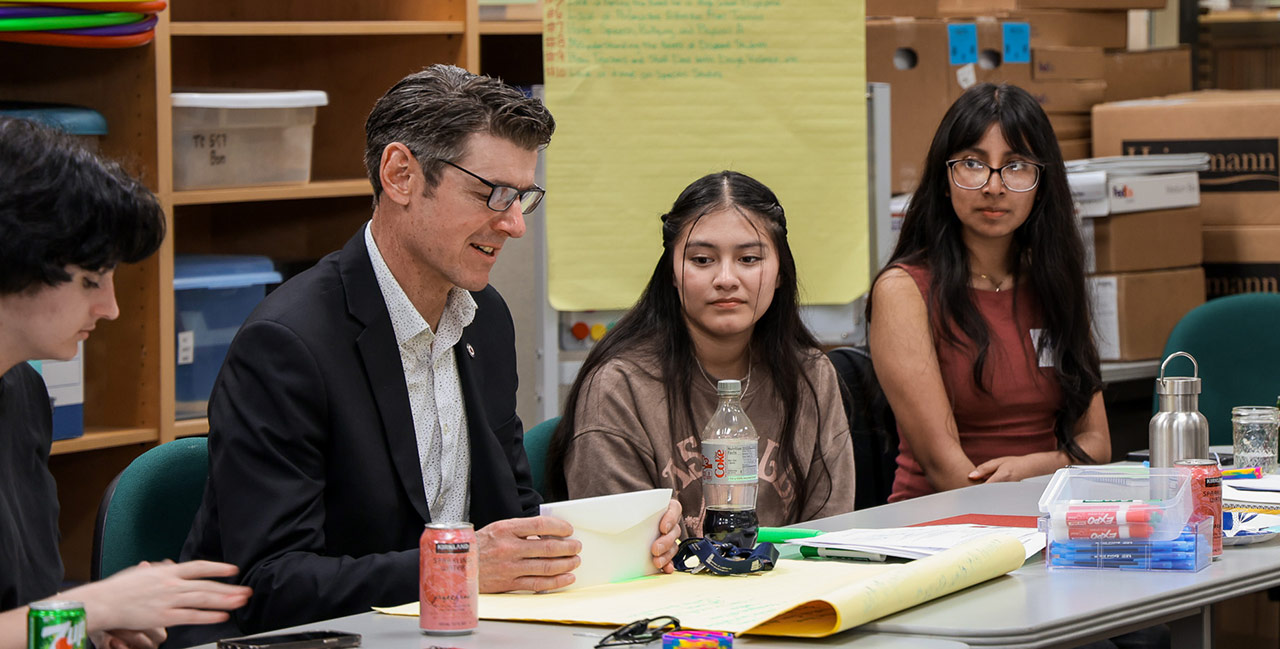
Humboldt County Superintendent of Schools Michael Davies-Hughes works with students during a Student Advisory Council meeting.
In Spring 2025, the Humboldt County Office of Education (HCOE) launched its inaugural Superintendent’s Student Advisory Council to ensure high school students from across the county had a direct role in shaping educational decisions. The goal of this first council was to co-create a sustainable, youth-led structure that centers student experience, shared governance, and authentic student leadership.
Why Student Voice is Critical for Humboldt County
The Humboldt County Office of Education (HCOE) serves a vast and diverse region.
~17,400 Students
88 Public Schools
30 School Districts & 15 Charter Schools
Core Challenge
HCOE staff recognized that traditional systems often create structural barriers, excluding students who could meaningfully contribute to leadership and decision-making. The Student Advisory Council was designed to intentionally bridge this gap.
Major Themes From Cohort I’s Work
Student Agency & Shared Governance
Students served as active co-creators of the Council. They helped design meeting formats, proposed structural norms, and gave input on real-time policy issues. HCOE staff emphasized transparency and respect, fostering a culture where student voice was treated as essential to the Council’s success.
Student Development and Adult Facilitation
Many students were engaging in leadership work for the first time. HCOE staff balanced support with restraint, providing scaffolds such as templates and facilitation roles while allowing students to guide the Council’s direction. Students built critical skills in leadership, collaboration, and policy analysis.
Lived Experiences in Humboldt Schools
Students shared firsthand accounts of the barriers they face in their educational environments, including racism, bullying, lack of cultural representation, economic hardship, and institutional distrust. These experiences underscored the urgent need for student-informed approaches to equity and inclusion.